Back to the Bush
Website Redesign
Back to Bush is a vibrant Indigenous-led charity committed to conserving Australia’s natural environment and empowering Indigenous communities. Their mission integrates cultural heritage preservation with sustainable environmental practices.
Problem: The organisation’s existing website was outdated, cumbersome, and poorly structured, leading to a frustrating user experience. This negatively impacted visitor engagement, donations, and volunteer recruitment.
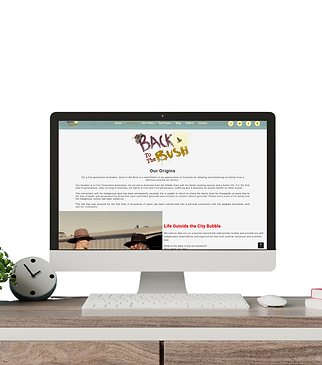
The Start
I began by engaging closely with key stakeholders to understand the organisation's goals and constraints.
I conducted interviews and initial research to uncover user needs and pain points.
The Process
Through persona development and detailed user journey mapping, I distilled complex user behaviours into actionable insights.
Employing ideation techniques such as Crazy 8s, the team generated diverse design concepts before committing to prototypes.

The Solution

Website
Redesigned...
The final solution was a modern, accessible website designed to clearly articulate the organisation’s mission and facilitate easy user engagement. Improved navigation and call-to-actions streamlined visitor interactions.
Perceived Outcome
Post-redesign metrics should show significant lifts in usability and user engagement across all visitor segments.
Donations and volunteer sign-ups to be increased, directly supporting the organisation’s business goals.

Design Process
Creating detailed user flows contextualised how users interact with the site, informing streamlined navigation and task completion paths. Crazy 8s workshops and iterative sketches fostered innovative yet user-centered designs.
Thought Process
I adhered to a systematic design thinking framework: empathising deeply with users, defining clear problems, ideating solutions, prototyping iteratively, and continually testing for refinement. This ensured the design met real user requirements.

User Persona
User personas were curated based on qualitative interviews, representing demographics and motivations of primary user groups. These personas anchored design decisions and helped maintain focus on user-centred outcomes.

Research included user interviews and surveys, uncovering key pain points and behavioural insights. These findings informed targeted design changes to enhance user experience and achieve business objectives.
Journey to the Soultion

Starting with low-fidelity wireframes allowed rapid exploration of layout and structure. Subsequent high-fidelity interactive prototypes refined aesthetics and interactions, validated through user feedback.

Research Methodology
Research included user interviews and surveys, uncovering key pain points and behavioural insights. These findings informed targeted design changes to enhance user experience and achieve business objectives.
Powerful Impact
Simplified navigation paths and clearer content hierarchies fostered greater user confidence and satisfaction. These improvements cultivated trust, encouraging repeated visits and increased support.
Main Suggestions
-
Streamline navigation; limit menus to essential, clearly labeled sections.
-
Showcase stories and impact using prominent visuals and concise text.
-
Prioritize donor and volunteer CTAs; make them visually distinct and accessible.
Final Note
The comprehensive UX redesign combined qualitative insights, quantitative measures, and compelling storytelling. This delivered tangible improvements in user engagement, organisational credibility, and mission impact.